For patients with significant upper jawbone loss, hearing that traditional dental implants are not an option can feel like the end of the road. At Rock Solid Smiles, it is not.
We offer zygomatic and pterygoid implants in Tampa, FL, two of the most advanced implant techniques available in dentistry today, specifically designed to give patients with severe bone loss a path to a permanent, fully fixed smile. If another practice has turned you away because of insufficient bone, we encourage you to come in for a second opinion. The solution you were told did not exist may be closer than you think.
Zygomatic implants are significantly longer than standard dental implants and are anchored not into the upper jawbone, but into the zygomatic bone, commonly known as the cheekbone. The cheekbone is an exceptionally dense, stable structure that is not subject to the same resorption process as the jaw following tooth loss, making it an ideal anchor point for patients who no longer have sufficient upper jawbone.
Because zygomatic implants bypass areas of deficient bone entirely, they eliminate the need for large-scale sinus-lift procedures or extensive bone grafting in most cases. This significantly reduces treatment complexity, shortens the overall timeline, and allows patients to move toward a fixed restoration much sooner than the traditional graft-and-wait approach would.
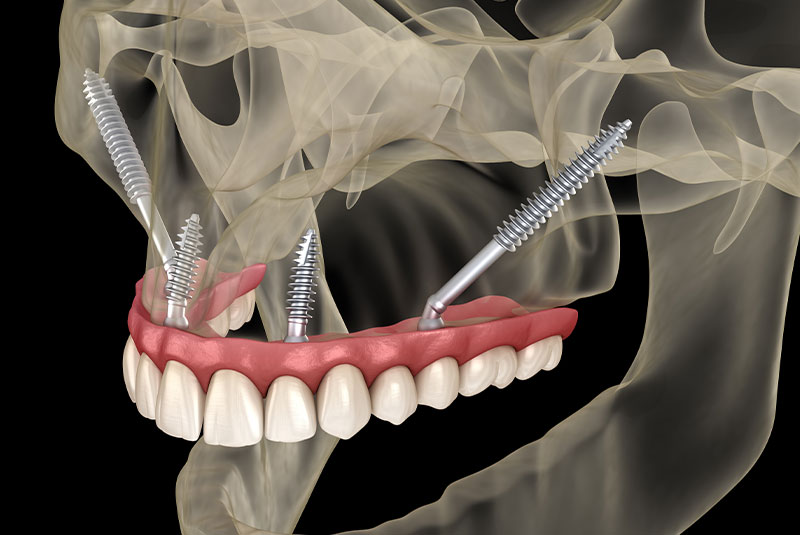
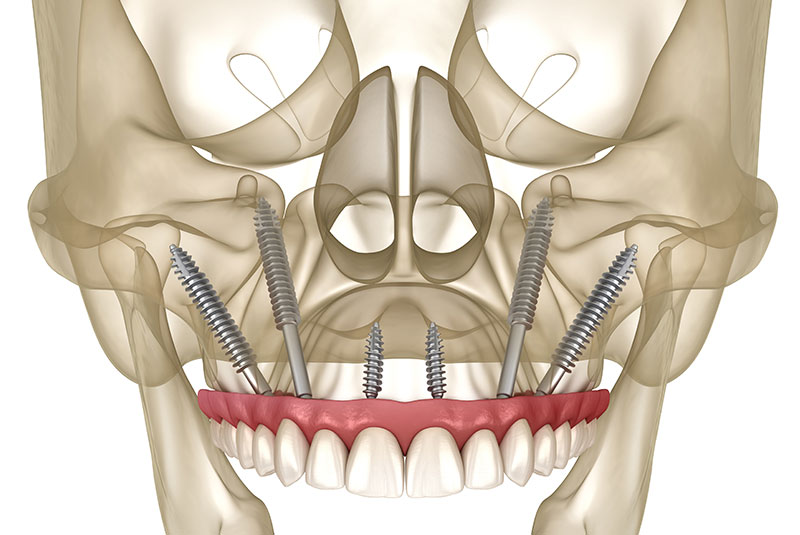
Pterygoid implants are placed into the pterygoid process, a dense region of bone located behind the upper jaw near the base of the skull. Like the cheekbone, the pterygoid bone retains its density even when the rest of the upper jaw has undergone significant resorption, making it a reliable anchor point for patients who cannot support standard posterior implants.
Pterygoid implants are most commonly used to replace missing upper back teeth and are frequently placed alongside standard or zygomatic implants as part of a comprehensive full-arch restoration plan. Their placement in the pterygoid bone provides strong posterior support for a full-arch prosthesis. It eliminates the need for sinus augmentation procedures in many patients who would otherwise require them.
In many full-arch cases involving severe upper jawbone loss, zygomatic and pterygoid implants are used in combination with one another, and sometimes alongside standard implants in areas where usable bone remains. This coordinated approach allows our oral surgeons to create a comprehensive, stable support system for a complete upper arch restoration without relying on bone that is no longer adequate to anchor conventional implant posts.
Your 3D imaging determines the specific combination of implant types used in your case, your degree of bone loss, and your anatomical structures. This is a highly individualized treatment, and the planning behind it is as important as the surgery itself. This is one of the most complex procedures available in implant dentistry, and it is performed at Rock Solid Smiles by oral surgeons with the advanced training and hands-on experience required to do it safely and with precision.

Traditional implants placed in areas of deficient bone typically require significant grafting followed by months of healing before implant placement can begin. Zygomatic and pterygoid implants bypass deficient bone entirely, anchoring in dense structures that are already present. For most patients, this eliminates the need for large-scale grafting and dramatically reduces the overall treatment timeline.
A restoration supported by zygomatic or pterygoid implants is permanently fixed in place. It does not come out at night, does not require adhesives to stay in place, and will not shift during a meal or conversation. It functions, feels, and looks like a natural set of teeth in every meaningful way.
The stimulation provided by implant posts helps slow further bone deterioration in areas where loss has already occurred. Many patients who transition from full upper dentures to an implant-supported restoration notice positive changes in facial fullness and jaw structure over time.
Zygomatic and pterygoid implants exist because the field of implant dentistry recognized that patients with severe bone loss deserve the same access to permanent, fixed restorations as everyone else. For patients who have spent years believing a stable, non-removable smile was not possible for them, these solutions can be genuinely life-changing.
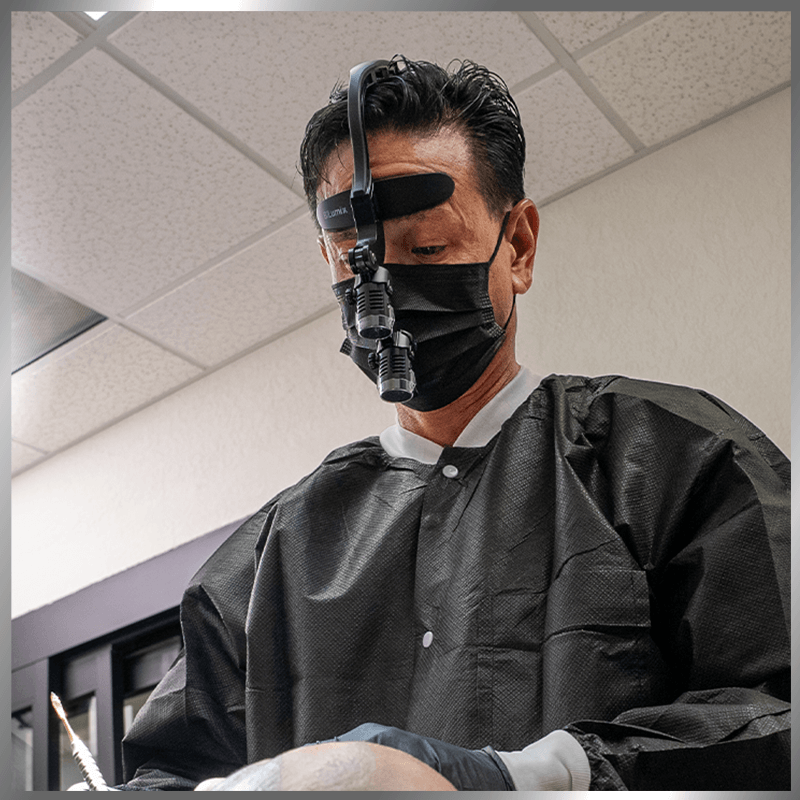
Zygomatic and pterygoid implant placement is among the most technically complex procedures in oral surgery. Performing these procedures safely and successfully requires not just general training in implant dentistry, but also specific advanced training in zygomatic and pterygoid techniques, combined with significant hands-on surgical experience and diagnostic technology to plan each case with precision.
At Rock Solid Smiles, every member of our clinical team is a board-certified oral surgeon. Oral surgeons are the specialists most extensively trained in bone anatomy and the surgical techniques involved in complex implant placement. When you choose Rock Solid Smiles for zygomatic or pterygoid implants, you are not choosing a general dentist who places implants on the side. You are choosing a team that has been specifically trained for this level of surgical complexity.
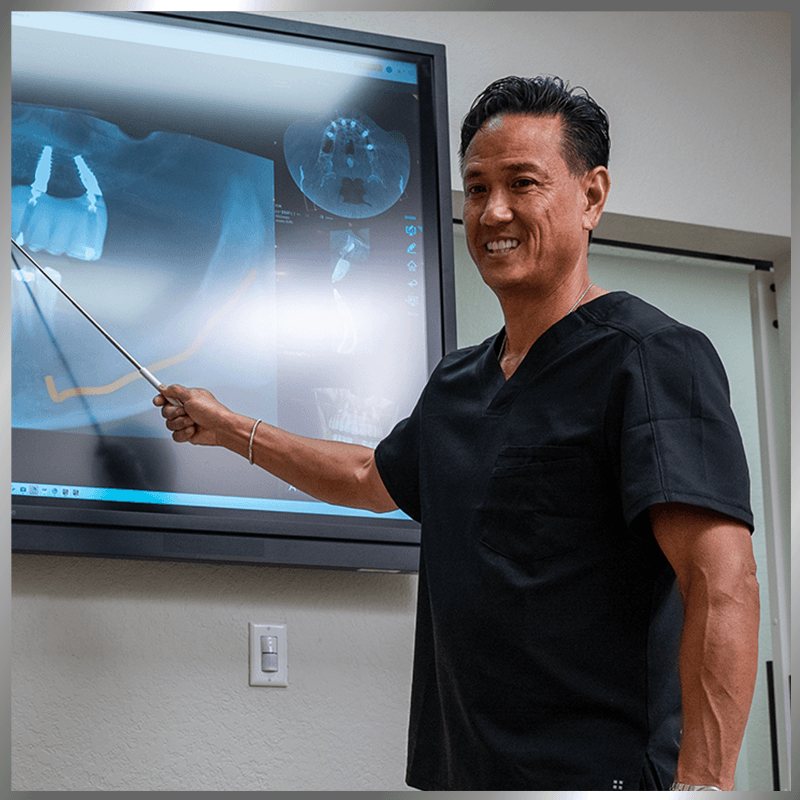
Because of the anatomical complexity involved in zygomatic and pterygoid implant placement, your consultation at Rock Solid Smiles is exceptionally thorough. Our team uses advanced 3D CBCT imaging to map the precise structures of your upper jaw, cheekbones, sinuses, and surrounding anatomy.
This imaging is not optional for these cases. It is the foundation of safe, accurate surgical planning, allowing our team to determine the optimal implant positions and angulations for your unique anatomy before any surgery is performed.
No two zygomatic or pterygoid implant cases are identical. Your treatment plan is built around your specific degree of bone loss, your anatomical structures, and your restoration goals. Our team will walk you through exactly what your procedure involves, what the recovery will look like, your timeline, and your final result before a single step of treatment begins. There are no surprises in our process.
Surgery is performed by our oral surgeons using advanced, precision-guided techniques developed specifically for zygomatic and pterygoid implant placement. You will be kept completely comfortable throughout the procedure with appropriate sedation and anesthesia. Because these implants anchor into exceptionally dense, stable bone, they can often support a temporary fixed restoration on the same day as surgery in qualifying cases.
Following surgery, your implants begin integrating with the surrounding bone. Our team monitors your healing closely through scheduled follow-up visits and remains readily available throughout your recovery. Most patients find the healing process more manageable than expected. Swelling and soreness in the first several days are normal and typically resolve steadily in the days and weeks that follow.
Once your implants have fully integrated and been tested for structural stability, your custom-designed permanent prosthesis is fabricated and attached. Our team designs your final restoration to look natural, function with full bite strength, and complement your facial features precisely. Long-term maintenance requires nothing beyond routine brushing, flossing, water flossing beneath the prosthesis, and regular professional cleanings.
I understand the information disclosed in this form may be subject to re-disclosure and may no longer be protected by HIPAA privacy regulations and the HITECH Act.